Pages

Showing posts with label Book Review. Show all posts

Saturday, May 16, 2026

Review: Blankets

BlanketsBlankets by Craig Thompson
My rating: 5 of 5 stars

A 500-pages long graphical novel, an autobiographical visualisation of adolescence and partly childhood of the author in Wisconsin in the beginning of the 1990s.

Beautifully drawn, sentimental and as deep as the emotional life of a 16-year old can be. First real love, grappling with what is right and wrong, understanding own values, understanding what one really wants - this is probably all too familiar to many who have gone through it.

And gives an excellent picture of what a life in a deeply Christian family living in a small town in the U.S. could have been back in the 1990s.

Monday, April 27, 2026

Review: The Fund: Ray Dalio, Bridgewater Associates, and the Unraveling of a Wall Street Legend

The Fund: Ray Dalio, Bridgewater Associates, and the Unraveling of a Wall Street LegendThe Fund: Ray Dalio, Bridgewater Associates, and the Unraveling of a Wall Street Legend by Rob Copeland
My rating: 5 of 5 stars

Brilliant journalism turned into a book by Rob Copeland. It felt like reading the script for the famous "The Office" TV series - with its megalomanic boss, inappropriate jokes, mistreating colleagues and endless office gossips. Just less humour.

When I read Ray Dalio "Principles: Life and Work" some years ago, I gave it a 4-star review, appreciating many of the pieces of the management advice from the book, but wrote following:
I cannot agree with all of these principles. Many of them felt too stretched and reminiscent of "the brave new world" of a perfect organisation of corporate soldiers where everyone is expected to work 60-hours weeks. The praised idea meritocracy (the best ideas win) at times reminded autocracy (in the end, the big boss still decides). "Sorting" people according to their psychological personas felt too stretched as well.

This book by Rob Copeland basically explores these dubious principles put in practice at Ray Dalio's Bridgewater Associates. As a result, you get a pretty toxic workplace.

Great financial results, great salesmanship, many useful management lessons - but at what cost?

My advice would be to read both books and decide for yourself.

Thursday, February 19, 2026

Review: Unreasonable Hospitality: The Remarkable Power of Giving People More Than They Expect

Unreasonable Hospitality: The Remarkable Power of Giving People More Than They ExpectUnreasonable Hospitality: The Remarkable Power of Giving People More Than They Expect by Will Guidara
My rating: 4 of 5 stars

An engaging story of how a restaurant in the New York got to the award of the best restaurant in the world - and the work which preceded this title. Will Guidara is focusing on the service part of the restaurants.

The management lessons of the book are rather trivial. The inner life of organising service in a superb fine-dining restaurant was very interesting to read. After reading it, you cannot help not noticing small details when dining in a good restaurant.

In particular, I liked application of the Rule of 95/5: Manage 95% of your business down to the penny; spend the last 5% “foolishly”. That last 5% has an outsize impact on the client experience.

I also found interesting the principle of “It’s important to me” card in the partnership. In the case of disagreements, the only way to proceed in pursuit of a good partnership is to decide that whoever cares more about the issue can have their way. You can agree on “It’s important to me” card to be pulled in certain situations. But this card should not be abused by pulling it too many times.

Most of all, it was interesting to read about all the examples of how they applied small gestures of extraordinary hospitality in their restaurant.

Thursday, December 04, 2025

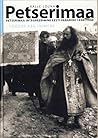
Review: Petserimaa: Petserimaa integreerimine Eesti Vabariiki 1920-1940

Petserimaa: Petserimaa integreerimine Eesti Vabariiki 1920-1940Petserimaa: Petserimaa integreerimine Eesti Vabariiki 1920-1940 by Kalle Lõuna
My rating: 4 of 5 stars

Hästi uuritud populaarteaduslik ülevaade Petserimaa eluolust esimese Eesti Vabariigi ahal. Sisaldab huvitavat statistikat ja mälestusi. Natuke kuiv, oleks tahtnud rohkem pilte ja elavamaid kirjeldusi. Kuid annab hea ülevaate selle vaesema ja muust Eestist (usuliselt, rahvastiku koosseisust ja tööstuslikult) erineva regiooni eluolust.

Saturday, November 29, 2025

Review: The Brain That Changes Itself

The Brain that Changes Itself: Stories of Personal Triumph from the Frontiers of Brain ScienceThe Brain that Changes Itself: Stories of Personal Triumph from the Frontiers of Brain Science by Norman Doidge
My rating: 5 of 5 stars

This is the book about the plasticity in the brain. Our brains are not static - and we are able to impact how we think, react and feel ourselves.

I found some of the claims in the book to be too strong like the good benefits of the psychoanalysis or negative impact of watching pornographic content on brains. But when taken to the extremes - both good or bad - there are very interesting stories and personal anecdotes that exemplify how our brain is impacted.

Take love for example. Anyone who has been in love, will probably not argue that it changes one's brain. Two brains in love go through a period of heightened plasticity, allowing them to mold to each other and shape each other’s intentions and perceptions. And if we get separated from our love object, our brains undergo unlearning process - a hard and time consuming adaptation of the brain to the new reality.

Sometimes, our brains maps can merge two separate phenomena into one, counterproductively. For example, associating sex with violence. Or relationship with abusive behavior. Solving it requires rewiring brain maps by psychoanalysis or similar.

Or take pain. The brain decides how much endorphins to use to quell pain we experience. Soldiers during the war report of not feeling any pain when they are seriously wounded until they are out of battlefield. Their brains only allow the pain signals when the immediate threat is gone. Mother soothing her hurt child helps the child’s brain to turn pain volume down.

Although many experiments, studies and stories in the book are negative per se, I liked the overall positive message of the book. We are able to influence our brain plasticity (which is deteriorating with age) by providing a constant challenge to it. Studying foreign languages, solving complex puzzles, mastering new physical activities, acquiring a new career, having a regular physical exercise, learning new dances - have all shown to have a positive effect on people having statistically less Alzheimer, sharper memory and better focus in older age.

Not a news really, but obsessions and worries are also possible to target - by literally "rewiring" the brain, making it focus on something else, something positive and pleasure-giving. Anyone working on any personal obsessions or worries can attest that it is, at times, very hard - but possible, with dedication, practice and discipline.

View all my reviews

Friday, October 31, 2025

Review: No-Drama Discipline: The Whole-Brain Way to Calm the Chaos and Nurture Your Child's Developing Mind

No-Drama Discipline: The Whole-Brain Way to Calm the Chaos and Nurture Your Child's Developing MindNo-Drama Discipline: The Whole-Brain Way to Calm the Chaos and Nurture Your Child's Developing Mind by Daniel J. Siegel
My rating: 5 of 5 stars

Another great book on parenting by Daniel J. Siegel and Tina Payne after their "Whole-Brain Child".

Every chapter is full of useful advice - and well-structured too. The illustrations in the form of comic strips (the way we reactively discipline our kids vs the way we would actually like to discipline them) are very helpful.

Connect first.
Connect with the kids emotionally.
Make sure you are sufficiently calm before reacting.
Try to understand why they behaved they way they did.
Use physical touch.
Use "below eye level" technique.
Don't dismiss the child's emotions feelings ("You are just tired"), validate their feelings and embrace their emotions.

Then redirect.
Make sure the time is right - teaching a lesson when emotions are high is rarely a good idea.
Make it with child's development stage, needs and respect for the child's integrity.
Talk less, listen more.
Describe, don't preach.
Instead of no, use yes with a condition (“Yes, we’ll read another story, but we need to do it tomorrow”).
Involve your child in the discipline.
Emphasize the positive (“I love it when you’re encouraging your sister like that”.)

One of the concluding chapters - The Messages of Hope - is a great and encouraging ending to the book.
"Sometimes there’s just nothing we can do to “fix” things when our kids are having a hard time."

"The not-so-great parenting moments are not necessarily such bad things for our kids to have to go through - because our messy, human, parental responses give kids opportunities to deal with difficult situations and therefore develop new skills."

"When having messed up, they key is to repair any breach in the relationship as quickly as possible. Ruptures without repair leave both parent and child feeling disconnected."


Recommending to any parent. I often think that my kids are my best teachers right now. This book has helped me to become a better student.

Monday, October 20, 2025

Review: Notes on a Nervous Planet

Notes on a Nervous PlanetNotes on a Nervous Planet by Matt Haig
My rating: 2 of 5 stars

Matt Haig, a British author who had undergone deep depression, suicidal period of his life and still having anxieties, has written the book about everything which makes us more anxious - and the remedies to it.

What was good about this book? Bringing out mental health as something we should talk about, something we should not be ashamed of, something we need to acknowledge and work on. It was also interesting to read Matt Haig's descriptions of his occurrences of strong anxiety and how he was dealing with.

Mostly, however, I found this book rather superficial and annoying even. All the advice is rather basic - and very few sources to the claims are brought out. Consuming a lot of media and news, spending a lot of time in social media and in crowded spaces makes you anxious. Wow, what's an insight! Walking in the nature, reading, spending time with ones you love makes you less anxious. Wow, even more insightful!

Literary essay-like style is beautiful at certain times, but mostly annoying with many lists and short sentences to prove the point.

Sunday, September 28, 2025

Review: Tartu tuld toomas

Tartu tuld toomas. Linnauitaja ülestähendusi taaskohtumiselTartu tuld toomas. Linnauitaja ülestähendusi taaskohtumisel by Mihkel Mutt
My rating: 3 of 5 stars

Huvitav Tartu linna iseloomustav essee. Üksjagu linnalugu, natuke kirjanduskriitikat, siin-seal ühiskonnakriitikat, natuke metafüüsilist absurdi - kirju, kuid nauditav kirjastiil. Raamatu esimene osa meeldis rohkem, kus Mutt kirjeldab vaimukalt erinevaid linnaosi ja tartulikke jooni. Mida rohkem lõpu poole, seda rohkem on filosoofiat ja metafüüsikat, mis ei tundu alati uudne või põnev.

Tartus õppinu ja elanuna aga oli üldiselt soe tunne seda raamatut lugeda. Üht-teist uut sai teada ka linna ajaloost ja geograafiast.

Thursday, July 24, 2025

Review: Sult

SultSult by Martin Ernstsen
My rating: 3 of 5 stars

Quite good graphic adaptation of the famous Norwegian novel by Knut Hamsun about a poor writer who is struggling with hunger and depressive thoughts.

Tuesday, April 29, 2025

Review: Putin's People: How the KGB Took Back Russia and Then Took On the West

Putin's People: How the KGB Took Back Russia and Then Took On the WestPutin's People: How the KGB Took Back Russia and Then Took On the West by Catherine Belton
My rating: 3 of 5 stars

A former FT journalist in Russia, Catherine Belton, has done a formidable research for this book. Many interviews and documents have been worked through to depict how Putin and his men from ex-KGB have created kleptocratic and revanchist state such as Russia has become in 2000s-2010s - at the same time, securing an improved way of living for its residents to a certain degree.

I found interesting historical accounts of how Putin and KGB worked in the DDR of 1980s, how they siphoned money out of the USSR to useful allies in the West to discredit the system in the West - and how this eventually has continued after the collapse of the Soviet Union.

It was also interesting to read the details of how it happened that a previously rather unknown uncharismatic person has become one of the most powerful statemen of the world - and how the independent large business, juridical and political systems have all been gradually suppressed.

At times, the number of names and connections was difficult to follow. The book could have some registry of key people to refer to.

It also felt too ideological at times - written not by an impassionate historian, but by a person referring to countless of stories to prove one main point - that ex-KGB is ruling Russia and is dangerous for the West. This could have been mentioned fewer times.

Saturday, March 15, 2025

Review: The Storyteller: Tales of Life and Music

The Storyteller: Tales of Life and MusicThe Storyteller: Tales of Life and Music by Dave Grohl
My rating: 4 of 5 stars

A one-time drummer for Nirvana (one of my favourite bands which was sort of formative to my teenage years) and a founder and the main figure behind Foo Fighters Dave Grohl tells stories from his life.

He starts with the description of his childhood and teenage years in suburbs of Virginia, near Washington - all via references his love for music. He then proceeds with how he has gotten in a punk rock band Scream and later to Nirvana. After the death of Kurt Cobain, Dave Grohl eventually re-invents himself in a band established by himself and some companions, Foo Fighters.

I loved reading about Grohl's passion for music. This is the main theme which flows throughout the whole book. Starting from how he was "playing" melodies with his teeth, then using pillows in his bedroom instead of the drums - then diving into the world of rock and roll concerts, first as a spectator, then as musician on the scene.

I particularly liked the first half of the book, learning about what the life was like in Virginia in the 1970s-1980s, what it meant to be touring around in the USA, Europe and Australia as part of a band in a van on very meagre means, how was it to be part of Nirvana and sharing the flat with Kurt Cobain.

The stories of his later life were also fun to read, but were more sporadically structured and presented.

Overall, Dave Grohl seems like a nice guy, someone you would like to have among your friends - principled, passionate, but easy-going lad. The book reads exactly like that.

Wednesday, February 12, 2025

Review: To Sell is Human: the Surprising Truth About Moving Others

To Sell is Human: The Surprising Truth About Moving OthersTo Sell is Human: The Surprising Truth About Moving Others by Daniel H. Pink
My rating: 4 of 5 stars

Although not as good book as Pink's classics "Drive", I still liked "To Sell is Human".

The first part about what sales was like before and what it means now was somewhat dubious, although I liked how Pink framed selling into "moving people" - this is something we all do.

But the subsequent parts were rather good. Like in "Drive", there are simple and short arguments supported by social studies and ample research. And I liked in particular various exercises to try and test various good practices. I have actually tested some of them on my team ("have a conversation with a time traveller" trying to explain a contemporary product to someone who lived few hundreds years ago; try one-word pitch, subject-line pitch or Pixar pitch) - it went really well.

Attune to your counterpart, try to really get into what they need.
Mimic strategically.
Don't be overly extraverted or introverted - being an ambivert is best.
Practice interrogative self-talk (Can I do it? Why?)
Be positive, but back up when needed.
Be clear.
Know how to pitch your idea - forget the elevator pitch, there are six innovative ways to structure your pitch.
Make your partner look good. Say "Yes and" (not an easy one in the real life!)
Most of all, make it purposeful.
Don't do upselling, do upserving instead.

I really liked the idea bout clarifying others’ motives with two “irrational” questions.
Suppose your daughter is delaying and denying, and generally resisting studying for a big end-of-the-year exam. You wouldn’t say, “Young lady, you must study,” or “Please, please study for the exam”. Instead, you could ask her two questions:
1. “On a scale of 1 to 10 with 1 meaning ‘not the least bit ready’ and 10 meaning ‘totally ready’, how ready are you to study?”
After she offers her answer, ask
2. “Why didn’t you pick a lower number?”
This is an unexpected question, it is not a binary off-on, yes-no question. It can expose an apparent “No” as an actual “Maybe”. Even more important, as your daughter explains her reasons for being a 4 rather than a 3, she begins announcing her own reasons for studying. She moves from defending her current behaviour to articulating why, at some level, she wants to behave differently.

Saturday, February 01, 2025

Review: A Contract with God and Other Tenement Stories

A Contract with God and Other Tenement Stories (The Contract With God Trilogy #1)A Contract with God and Other Tenement Stories by Will Eisner
My rating: 3 of 5 stars

A depiction of the life in Bronx, a suburb of New York inhabited mainly by the families of recent immigrants (many of them Jews) during the 1930s.

These are four separate stories, all of them quite dark, but with philosophical context.

The book really pictures well dull life of poorish suburb of New York of the 1930s. The hopes, disappointments and personal tragedies of its characters were all vividly depicted.

I personally would have preferred one longer story with several characters involved. The visual art is interesting, but too exaggerating to my taste.

Thursday, December 26, 2024

Review: Ultimate Guide to Google Ads

Ultimate Guide to Google AdsUltimate Guide to Google Ads by Perry Marshall
My rating: 3 of 5 stars

A solid introduction to the world of Google Ads. I liked the general principle that the book was preaching - how not to give away too much money to Google. At the same time, when relevant, it encourages to use Google's machine learning when picking the bidding strategies for various keywords.

I also liked that some general principles of marketing were well introduced in the context of Google Ads. Be sure you know what is your business' USPs. Follow the 80/20 rules - also in Google Ads, 20% of the keywords bring you 80% of profit. Measure relentlessly - most don't do that, so you can have an edge there.

Some chapters were somewhat superficial, some included a lot of self-promotion by the authors.

Overall, can recommend the book.

Tuesday, November 19, 2024

Review: Täiesti tavaline merereis

Täiesti tavaline merereisTäiesti tavaline merereis by Meelis Kupits
My rating: 4 of 5 stars

Mõnus lihtne lugu ühest ENSV kalurikolhoosile kuulunud laevareisist 1970-ndatel. Koomiksi visuaal on tore ja kena - sobib nii täiskasvanutele kui vanematele lastele.

Õpib üht-teist ajaloo kohta: kuidas tollal kalapüük käis, kus täpsemini Nõukogude Liidu laevad käisid, kuidas detailselt kogu see (plaani)majandus toimis. Hariv ja tore lugemine ning pildiline materjal!

Monday, November 04, 2024

Review: Radical Candor

Radical Candor: Be a Kickass Boss Without Losing Your HumanityRadical Candor: Be a Kickass Boss Without Losing Your Humanity by Kim Malone Scott
My rating: 4 of 5 stars

Kim Scott has worked at Google and Apple. The book is the collection of her experiences from there as well as her management beliefs packaged into an advice for managers.

At times, overly simplistic (yes, you need to provide feedback and encourage receiving it; yes, you need to organise and lead well-planned meetings) and repetitive, it nevertheless is a rather good management book in my view. Some of the lessons I take from it:

Radical candor: provide direct feedback and care personally thereby. You need both. Providing feedback without caring is obnoxious. Caring and never challenging directly is ruinous empathy.

How to fire people so that it is right for you, for the person in question and for the others? "When you fire someone, you create the possibility for the person to excel and find happiness performing meaningful work elsewhere. Part of getting a good job is leaving a bad one, or one that’s bad for you." and "Retaining people who are doing bad work penalizes the people doing excellent work. Failing to deal with a performance issue is not fair to the rest of the team."

Driving results collaboratively by "Get Stuff Done" wheel: Listen-Clarify-Debate-Decide-Persuade-Implement-Learn-Listen. Every step needs to be taken separately to ensure the best results.

"Loud listening": the best type of listening and debating culture in organisation is “strong opinions, weakly held”.

A distinction between "Big Debate" and "Big Decision" meetings: sometimes it is useful to have both kinds, separately, in that order.

Managing decision-making: "Don’t grab a decision just because the debate has gotten painful. A boss’s job is often to keep the debate going rather than to resolve it with a decision."

The right way to provide feedback is using technique “situation behavior impact”: 1) the situation you saw, 2) the behaviour (i.e. what the person did, either good or bad), 3) the impact you observed. This helps avoid making judgements about the person's intelligence, common sense, innate goodness, or other personal attributes.

Another useful tip on providing feedback: "Don’t “save up” guidance for 1:1 or a performance review."

Planned think time: "In addition to regularly planned meetings, people are going to want to talk to you about this or that; urgent matters will arise that you must deal with. You need time to clarify your own thinking, or to help the people who work for you clarify theirs. You should not be tyrannised by your calendar."

Saturday, November 02, 2024

Review: The Arab of the Future: A Childhood in the Middle East, 1978-1984

The Arab of the Future: A Childhood in the Middle East, 1978-1984The Arab of the Future: A Childhood in the Middle East, 1978-1984 by Riad Sattouf
My rating: 5 of 5 stars

A graphic novel by a famous French cartoonist of French-Syrian descent. It is a graphical memoir of his early life in Gaddafi's Libya, then France, then older Assad's Syria. Presented through the eyes of a young child, it catches interesting details of everyday life and sheds the light on cruel and bizarre world of Arab dictatorships of the 1970s-1980s.

Beautiful cartoon art, captivating story, funny and terrifying moments to follow.

Sunday, September 15, 2024

Review: Hold On to Your Kids: Why Parents Need to Matter More Than Peers

Hold On to Your Kids: Why Parents Need to Matter More Than PeersHold On to Your Kids: Why Parents Need to Matter More Than Peers by Gordon Neufeld
My rating: 4 of 5 stars

I liked the basic premise of this book: don't leave your kids to mostly socialise with their friends (although it might be tempting for hard-working and tired parents).

The book looks at the parent-child relationship through the lens of the theory of attachment: in order to grow up as self-esteemed and independent individuals, children need safety and predictability provided by the important adults in their lives. Although it might be fun to occasionally be with the friends, the relationships with them are always contingent on pleasing each other, always demanding. Two or more immature individuals cannot give unconditional acceptance to each other.

It was revealing to read this:
"True friendship is not possible until a certain level of maturity has been realised. Until children are capable of true friendship, they really do not need friends, just attachments."
.

The book has several flaws: authors are repeating the same points over and over again, are being constantly nostalgic for "good old days when kids obeyed to their parents" and are trying to persuade via fears of children's violence, disobedience etc.

Nevertheless, it is a very good reminder to parents that we need to preserve our ties to our children and don't easily let them go to our smaller "competitors" as authors put it.

I also found useful the tips from the chapter on discipline:
- Use connection, not separation (such as time-outs), to bring a child into line
- When problems occur, work the relationship, not the incident (“This is not good. We’ll talk about this later.”)
- When things aren’t working for the child, draw out the tears instead of trying to teach a lesson (“I cannot let you do that,” “I know you really wanted this to happen.”)
- Solicit good intentions instead of demanding good behaviour (“I know it isn’t what you wanted to happen.")
- Draw out the mixed feelings instead of trying to stop impulsive behaviour (“We are having such a good time together right now. I remember this morning when you weren’t too happy with me.”)
- When dealing with an impulsive child, try scripting the desired behaviour instead of demanding maturity (“This is the time to use your quiet voice.”)

Saturday, June 01, 2024

Review: No Filter: The Inside Story of Instagram

No Filter: The Inside Story of InstagramNo Filter: The Inside Story of Instagram by Sarah Frier
My rating: 5 of 5 stars

"No Filter" is a great dive into the history of Instagram - from how its co-founders Systrom and Krieger started it to how it has evolved into one of the most ubiquitous social networks in the world and how it has been embraced into the social network empire of Facebook.

The book is very well researched, involves the good deal of drama and is a very smooth read.

I loved how the author presented the major dilemmas that Instagram has been part of. Celebration of beauty around us and useful tips and recommendations, yes. The culture of bending the reality and searching for anything "instragrammable too. Instead of reflecting the reality, the reality has started to reflect what was on Instagram (e.g. "popular" food recipes, travel destinations, body shapes).

It was insightful to read how the management of Instagram - and then also Facebook/Meta - has responded to those challenges (and many others too like trolling, cybercrimes, disinformation campaigns) at various points of time.

It is fascinating to think what will Instagram be like in 10 year from now. Will we even have one then?

Thursday, May 09, 2024

Review: Work Rules!: Insights from Inside Google That Will Transform How You Live and Lead

Work Rules!: Insights from Inside Google That Will Transform How You Live and LeadWork Rules!: Insights from Inside Google That Will Transform How You Live and Lead by Laszlo Bock
My rating: 4 of 5 stars

"Work Rules!" was written by a former HR manager of Google. It is an excellent overview of how HR management including recruitment, performance review and learning are organised at Google.

There are many lessons to draw from Google. An engineer-dominated company as it is, Google makes most of the decisions based on data. This is something I could relate to a lot: "Don’t trust your gut. Don’t base your judgement on the first minutes of the interview." Instead, using work samples, tests of general cognitive ability, structured interviews.

I also found insightful examples of how to empower people to shape their work and the company. At Google, they run “quick hit” programmes periodically, focused on more targeted issues. For example:
• “Bureaucracy Busters”: asking people about all the annoying little impediments that make life exasperating.
• “The Waste Fix-It”: asking about practices that waste money.

OKR-s is a well-known practice. The book describes it in a detailed manner - how OKR-s of each individual are interconnected.

One very good lesson - instead of extensive 360 feedback sessions...
.Make the peer feedback templates more specific: instead of asking about several things the person does well / can do better, ask for one single thing the person should do more of, and one thing they could do differently to have more impact. If people had just one thing to focus on, they’d be more likely to achieve genuine change than if they divided their efforts.

"Pay unfairly" is another principle I very much agree with. Individual performance follows a power law distribution - the best people's performance is many times higher than average. Why not pay many times more then?

Glad that we implement many of these practices in our company.

Some of the chapters were not very insightful and did not feel that objective, written by one of the top managers of the company. Overall, however, it was great to learn from the example of the outstanding organisational culture.